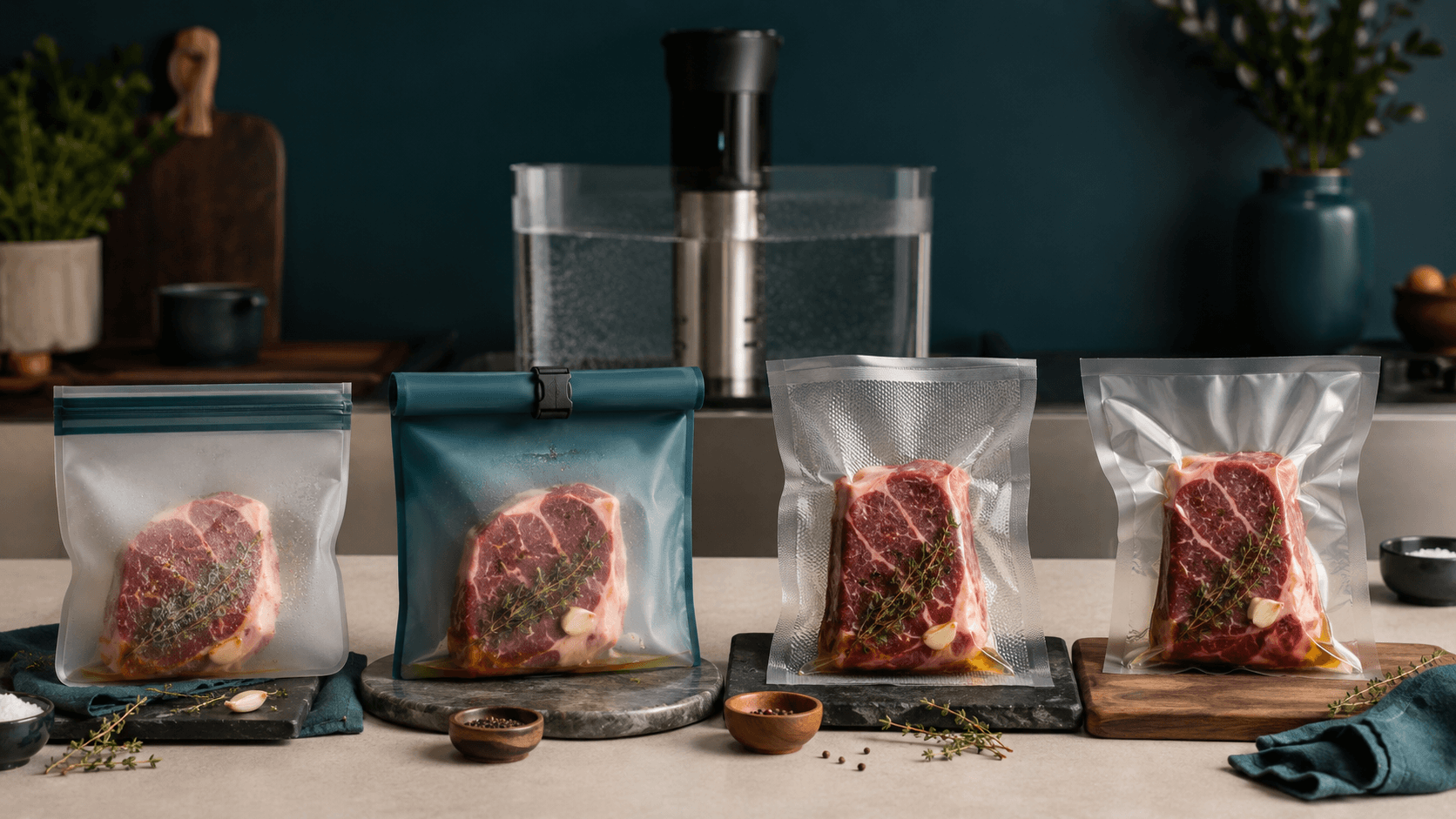
Quick picks by sealing method
| Bag | Best for | Closure | Reusable | Main limitation |
|---|---|---|---|---|
| Stasher Half Gallon | No-sealer kitchens | Pinch-Loc zip | Yes | Air removal and buoyancy |
| Anova Precision Reusable Silicone Bag | Bulkier or irregular food | Roll-top bar | Yes | Mixed seal feedback; thin Amazon sample |
| FoodSaver Heavy Duty Quart Bags | External vacuum sealers | Heat seal | No | Fixed quart size |
How we chose these sous vide bags
We ranked bags by fit with a specific workflow, not by marketing language or material alone. The main criteria were a clear sous vide or heated-food use statement, closure type, compatible sealer, capacity, cleaning burden, current availability, and meaningful limitations.
- Intended use: the manufacturer must support sous vide or relevant heated food contact.
- Closure: zip, roll-top, external vacuum, and chamber pouches solve different problems.
- Evidence: exact model identity and official specifications matter more than generic marketplace copy.
- Tradeoffs: reusable bags can trap air; disposable pouches add waste; chamber bags require different equipment.
- Owner feedback: used only as a limited signal, never as a failure rate.
The 3 best sous vide bags for different setups
Best Reusable Zip Bag
Stasher Half Gallon
Best for cooks who want a durable reusable bag and are comfortable using water displacement instead of a vacuum sealer.
Stasher lists this 64-ounce silicone bag for sous vide use and rates it for temperatures up to 425°F. Its wide profile fits portions that are awkward in a narrow quart pouch, while the pinch-lock closure avoids a separate sealing tool. The current Amazon listing showed a 4.6-star rating across 3,255 ratings when checked; seller, featured-offer, price, and availability status can change independently.
The compromise is air management. Thick silicone does not collapse around food like an external-vacuum pouch, so use careful water displacement and expect to add a rack, clip, or approved weight when buoyant food keeps the bag near the surface. The accessible exact-model owner sample was small and broadly positive, so it does not establish long-term stain, odor, or seal performance.
Good fit if: reuse matters more than achieving a tight vacuum around every cut.
Look elsewhere if: you want effortless air removal or frequently cook food that floats.
Best Reusable for Bulky Food
Anova Precision Reusable Silicone Bag
Best for cooks who prefer a wide roll-top opening over a zip closure for roasts, vegetables, or irregular portions.
Anova lists food-grade silicone construction, a roll-top closure held by a pull tie, and a temperature range from -40°F to 446°F (-40°C to 230°C). The wide opening and roll-top design are the main reasons to choose it over a conventional zip closure.
Evidence is thinner here. The exact Amazon listing had only two ratings and was currently unavailable for delivery to ZIP 10001 on August 1, 2026, so it cannot support broad owner-pattern or current Amazon-availability claims. Anova’s own review pool is larger but mixed, with repeated praise for reuse and size alongside complaints about the roll-top seal, trapped air, floating, and cleaning. Treat this as a specialized shape-and-opening choice, not a default winner, and verify current availability through Anova.
Good fit if: a wide opening and removable closure bar suit the food you cook.
Look elsewhere if: you want a mature retail review pool or a conventional zip closure.
Best for External Vacuum Sealers
FoodSaver Heavy Duty Quart Bags
Best for FoodSaver-style external suction machines when you want ready-cut quart bags instead of measuring and cutting a roll.
FoodSaver markets these heavy-duty bags as 30% thicker than its standard bags and lists them for sous vide, freezing, microwaving, and simmering. The exact 44-count Amazon listing showed a 4.8-star rating across 726 ratings and was in stock for delivery to ZIP 10001 on August 1, 2026; seller, shipper, featured offer, price, and availability can change independently.
Ready-cut bags remove one preparation step and the textured channel is designed for external vacuum sealers. The tradeoff is flexibility: quart size may be wasteful for small portions and too short for larger cuts. Owner feedback in the accessible sample was strongly positive about thickness and sealing, but that does not establish better cooking performance than every competing pouch.
Good fit if: you own an external vacuum sealer and usually portion food into quart bags.
Look elsewhere if: you need custom lengths, reusable bags, or chamber-compatible smooth pouches.
Why Ziploc freezer bags are not a pick
The old version of this guide recommended Ziploc gallon polyethylene freezer bags for short cooks. We removed that recommendation because Ziploc’s current FAQ says its polyethylene storage and freezer bags should not be used for sous vide. Ziploc Endurables are a separate silicone line designed for oven and sous vide use, but they are not the freezer-bag product previously recommended here. A large freezer-storage review pool does not override the intended-use instruction for the exact bag.
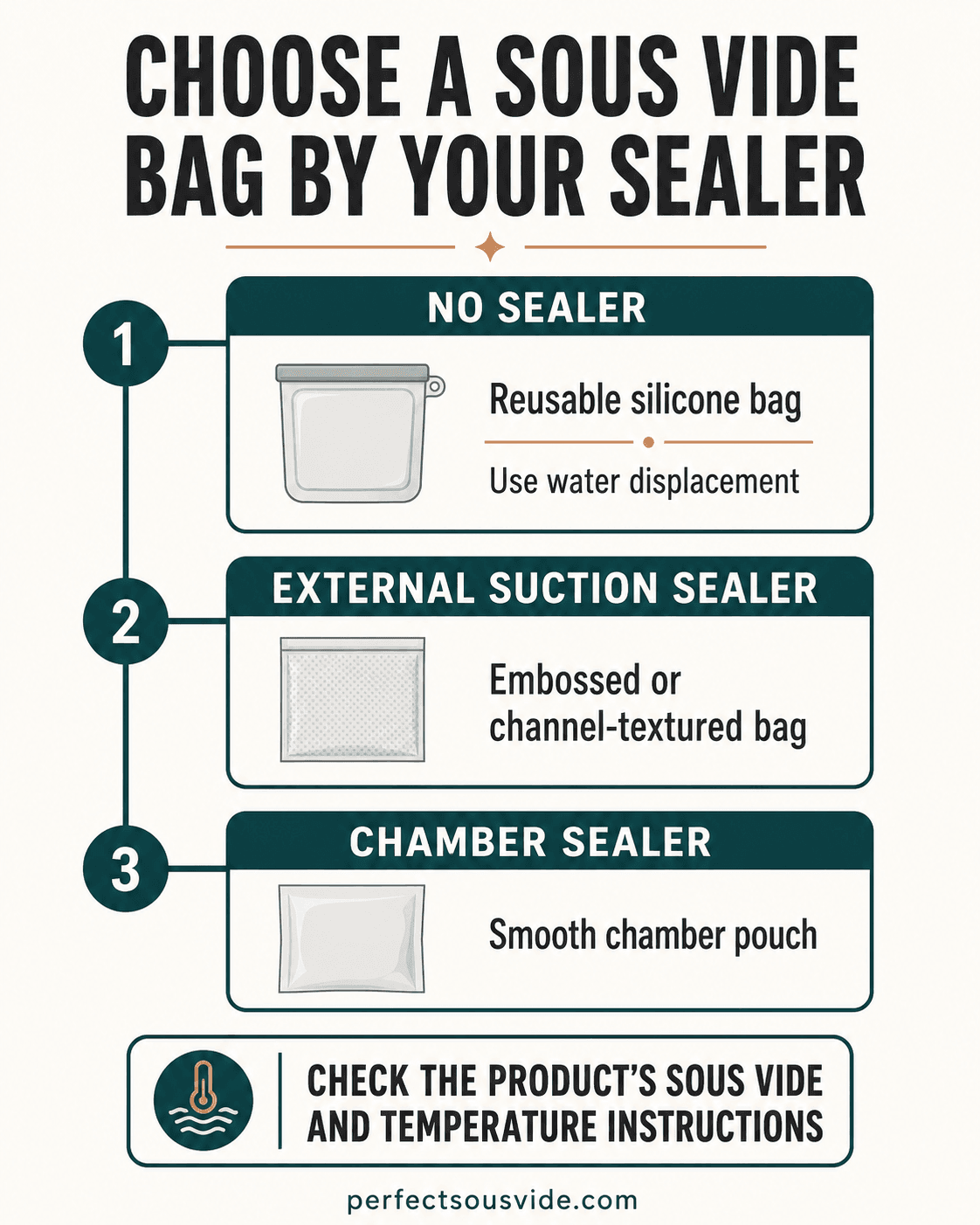
How to choose the right bag type
No vacuum sealer
Choose a purpose-made reusable sous vide bag and use water displacement. Expect to manage buoyancy and trapped air manually.
External suction sealer
Use embossed or channel-textured bags designed for your machine. Ready-cut bags are convenient; rolls let you create custom lengths. For machine choices, see our vacuum sealer comparison.
Chamber sealer
Use smooth chamber pouches in a size your machine can seal. Chamber systems are better suited to liquids, but pouch dimensions and seal-bar width still matter.
Long or high-temperature cooks
Follow the exact bag manufacturer’s temperature and use limits. Do not create a universal hours-or-temperature rule for an unidentified bag. Packaging suitability also does not replace a food-specific time-and-temperature schedule.
Bag safety and material claims
A bag being reusable, silicone, BPA-free, or thicker does not establish zero migration or universal safety. Use products intended for the cooking conditions and replace damaged bags. Our separate guide explains sous vide bag safety and microplastics without turning a product label into a health guarantee.
Frequently asked questions
What are the best sous vide bags for beginners?
If you do not own a vacuum sealer, start with a purpose-made reusable sous vide bag such as Stasher and learn water displacement. If you already own an external sealer, use bags explicitly listed for that machine and sous vide.
Can chamber pouches work in a FoodSaver?
Usually not. Smooth chamber pouches lack the embossed channels external suction sealers use to pull air toward the open edge.
Are reusable silicone bags better than vacuum bags?
They reduce disposable-bag use and do not require a sealer, but they usually require more manual air removal and buoyancy control. Vacuum bags conform more tightly to food but are commonly single-use.
The bottom line
Choose by equipment first. Stasher is the reusable zip-bag option in this set, Anova suits cooks who specifically want a wide roll-top opening, and FoodSaver Heavy Duty Quart Bags fit external vacuum sealers. For a chamber sealer, buy smooth pouches explicitly made for that machine after confirming pouch size and manufacturer use limits. Avoid treating generic freezer bags or a material label as permission for sous vide use.
Sources and methodology
This research-based comparison uses official product information, Amazon US retail snapshots, and limited owner feedback; it does not report hands-on product testing. Sources were checked August 1, 2026.
- Stasher Half Gallon official product page and Amazon ASIN B075TM3GVX.
- Anova Precision Reusable Silicone Bag official page and Amazon ASIN B0D6X8Z2GC.
- FoodSaver Heavy Duty Quart Bags official page and Amazon ASIN B0CTVK9LQH.
- Ziploc official FAQ.