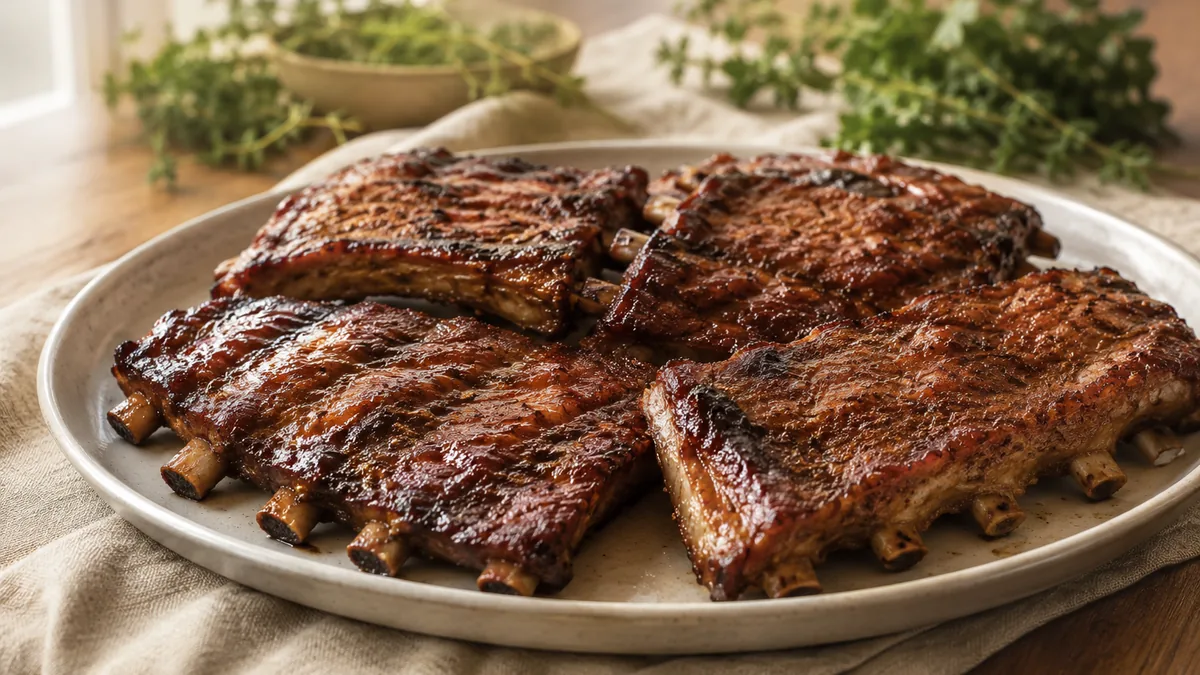
Choose only between these two pork spare-rib paths
Douglas Baldwin’s Pork Spare Ribs recipe gives these two schedules. Select one intact path; do not blend its temperature and time with advice written for another rib cut.
| Named cut | Bath temperature | Time | Use this as |
|---|---|---|---|
| Raw pork spare ribs | 176°F / 80°C | 8–12 hours | Baldwin’s higher-temperature spare-rib recipe path |
| Raw pork spare ribs | 155°F / 68°C | 24 hours | Baldwin’s lower-temperature spare-rib recipe path |
Do not rank either path as safer. Baldwin authors both for pork spare ribs, but this page does not convert either recipe into a numeric pasteurization conclusion for every irregular bone-in portion.
Use cut-and-schedule gate before starting
- Confirm cut. Package must say raw pork spare ribs. If it names baby back, St. Louis-style, beef, country-style, boneless, or pre-cooked ribs, stop. This page gives no schedule for it.
- Choose one named path. Use either 176°F (80°C) for 8–12 hours or 155°F (68°C) for 24 hours. Keep temperature and time paired exactly.
- Check start and shape boundary. Frozen ribs, differently identified products, and portions outside this named scope stop schedule transfer. No adjustment or pasteurization conclusion is supplied here.
- Finish after completed bath path. Surface browning can prepare ribs for service. It cannot repair an unmapped or invalid bath process.
This gate prevents common transfer errors. A baby-back reference may discuss 145°F for 36 hours or 165°F for 12 hours, but those are not spare-rib instructions on this page. A 152°F-for-24-hours reader comment is also excluded. Different cut, temperature, time, or starting state means a different evidence question—not a conversion.
Prepare source-sized portions
Baldwin’s recipe cuts spare ribs into portions that fit a pouch, suggesting 3–4 ribs per piece. Vacuum-pouch each portion and keep pouches fully submerged during cooking.
Optional source recipe prep: brine refrigerated ribs for 12–24 hours in water containing 7–10% salt and 0–3% sugar; then drain, rinse, pat dry, and apply barbecue spice rub before vacuum-pouching. This is a recipe sequence, not a required rule for every rib preparation.
For 176°F (80°C) path, Baldwin warns that pouches can puff and float. Keep them submerged with a wire rack or other restraint so they remain under water.
Keep food-safety claims separate from recipe schedules
For sous vide, temperature alone does not show that center has reached required conditions. Time at temperature depends on dimensions, shape, starting state, and thermal behavior. Baldwin separates heating and pathogen-reduction calculations from recipe timing; this page has no validated geometry-based calculation for irregular bone-in spare-rib portions. Treat both listed schedules as authored recipes, not safety guarantees.
Frozen starts, chilling, storage, reheating, and suitability for vulnerable diners are outside this guide. Do not extrapolate from these immediate-service recipe paths.
Finish for immediate service
After chosen bath path is complete, Baldwin’s recipe says to remove ribs from pouch, blowtorch top, and serve immediately with barbecue sauce. This finish is for surface browning and service. It does not add food-safety credit or replace bath-process requirements.
When this guide is not right
Leave this page when package does not identify raw pork spare ribs or when meal needs frozen handling, storage, reheating, or a timed oven, grill, or broiler finish. For a different labeled pork cut, use cut-specific guidance instead, such as this sous vide pork tenderloin guide or sous vide pork chops time and temperature guide. Neither is a conversion chart for spare ribs.